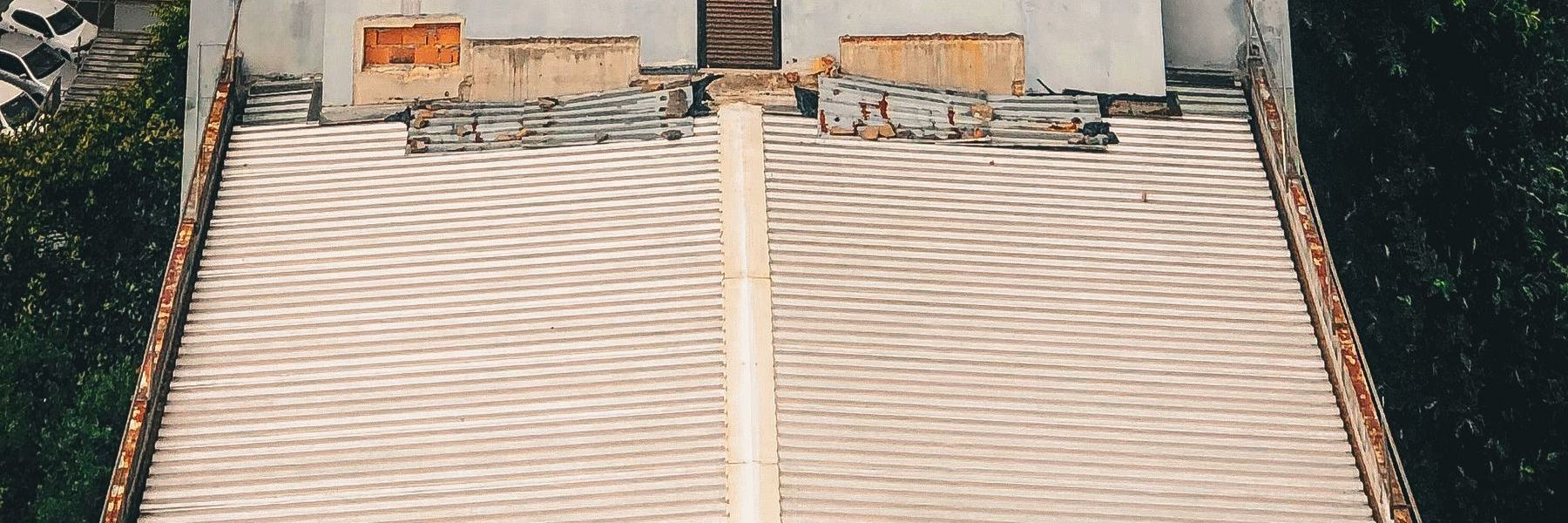
Flat-roof work · stock photo · Pexels
Short answers to the questions Phoenix homeowners ask about foam roofs, grouped by topic. Click any one for the page with the full detail.
Every question answered on this site, in one place. Each answer links to the page with the detail, the numbers and the calculators.
Small repairs — pinholes, bird holes, one blister — typically run a few hundred dollars (KY-KO's published language), with many roofers carrying a $250–$500 minimum. Seam splits and saturated sections run $500–$2,500 depending on area.
From Foam roof repair in Phoenix →
Small holes can be patched with elastomeric roof patch from a hardware store as a stopgap. The problems: you won't find every pinhole, and if the coating is chalking the patch fails around its edges. Use DIY to stop a drip, then have the roof walked.
From Foam roof repair in Phoenix →
A soft spot that stays soft, a dark stain through the coating, or a core sample (a roofer cuts a 2-inch plug and looks). Wet foam has to be cut out; coating over it traps the water.
From Foam roof repair in Phoenix →
Repair calls are prioritised in storm weeks; our partner contractor extends hours. Expect a walk within 1–3 days after a major storm and same-week repair for small jobs.
From Foam roof repair in Phoenix →
Most foam roofers run extended hours in storm weeks rather than true 24-hour dispatch. Our partner extends to 7am–8pm during monsoon and answers within four rings; night calls go to voicemail and are returned first thing.
Sudden storm damage (wind, hail) is typically covered; wear — a chalked coating that was overdue — typically is not. Photos before and after, and the roofer's written cause-of-leak, decide it.
No. Coating over saturated foam seals the water in. The roof must be dried (or the wet foam cut out) first — which is why a dry-in and a scheduled repair is sometimes the honest answer.
Storm wind lifts coating edges, dust blocks drains so water ponds over pinholes that never saw standing water, and hail bruises a chalked coat. The roof was already near the end of its coating life; the storm found it.
Sudden wind and hail damage usually is covered; wear and lack of maintenance usually is not. Photograph before any repair and get the roofer's written cause of leak.
A temporary dry-in can be done between storms; coatings and foam need a dry surface, so the permanent repair waits for a dry window — usually days, not weeks, in monsoon.
Small, firm blisters with intact coating are cosmetic and get coated over at the next recoat. Large soft ones or any that have split are leaks in progress and should be cut out and refoamed.
Don't. Opening it exposes foam to UV and water. A roofer cuts it out cleanly, dries the area, refoams and coats in one visit.
Coating over damp or dusty foam, foam sprayed over a wet substrate, or moisture entering through a pinhole and expanding in heat. Phoenix surface temperatures make them grow faster than anywhere.
Insects living under a failing coating, nesting instinct in soft material, and the texture itself. Older, chalked roofs get pecked more — the coating is softer and the bugs are there.
From Birds pecking the foam roof →
A granulated top coat is the proven fix; reflective tape and decoy owls work for weeks, not seasons. Repair the holes first or the granules go over leaks.
From Birds pecking the foam roof →
A few holes on a sound coat is a repair. Holes everywhere on a chalked coat is a recoat with granules — the holes are a symptom of the coating's age.
From Birds pecking the foam roof →
Water that drains within 48 hours is normal. Water still there on day three is ponding and should be fixed — the coating degrades under it and the weight adds up.
From Ponding water on a foam roof →
Yes — tapered spray foam is the standard way to rebuild slope on an existing flat roof without a tear-off.
From Ponding water on a foam roof →
If the ponding can't be fully corrected, yes. Silicone is the coating that holds up under standing water; acrylic is not.
From Ponding water on a foam roof →
Start at the wet ceiling spot and go straight up, then uphill: water runs along the deck before it drops. Check penetrations, parapet corners and scuppers first; they cause most flat-roof leaks in Phoenix.
From Flat roof repair in Phoenix →
If the deck is dry and the membrane is sound but aged, a restoration coating or a foam overlay costs a fraction of replacement and adds years. If a core sample shows wet insulation, replacement or cut-out comes first.
From Flat roof repair in Phoenix →
Yes, after the loose gravel is removed and the surface is dry — one of the most common Phoenix conversions.
From Flat roof repair in Phoenix →
Published intervals: every 5 years (Durafoam), 5–7 years (Travek), 8–12 years (Arizona Roof Co). In full Phoenix sun with no shade, plan on the shorter end and let the chalk test decide.
UV degrades the exposed foam a fraction of an inch per year; it yellows, pits, absorbs water and loses R-value. After enough years the saturated foam has to be cut out or the roof replaced — $10–$15/sq ft instead of $2–$4.
No — acrylic won't bond to silicone. Silicone over acrylic works with the right primer. Ask what's on the roof now before you accept a quote.
Recoating is maintenance and is not treated as a re-roof; full replacement requires a Phoenix building permit ($135–$720 by project value). Confirm with Planning & Development for your city.
The acrylic binder is breaking down under UV and releasing pigment as powder. It is normal ageing and the signal that a recoat is due within a season or two.
From Chalking and faded coating →
Washing removes the powder but not the cause; the coating keeps thinning. Washing is step one of a recoat, not a substitute.
From Chalking and faded coating →
Yes — reflectivity drops as the white coat greys and chalks. A fresh top coat restores it, which is part of why recoats pay back faster than people expect.
From Chalking and faded coating →
For foam roofs with decent slope, a quality acrylic elastomeric at 20–30 dry mils is the standard and the most recoatable. For roofs that pond, silicone. Both are white and reflective; both need the chalk test every spring.
Applied as a recoat, $2–$4 per sq ft (Travek) — $4,000–$8,000 on a typical home. Silicone sits at the top of that band or above.
Longer than acrylic in UV and far longer under ponding water; manufacturers quote 10–20 years. In practice the surface collects dust and loses reflectivity, so plan on washing it and re-testing every few years.
The coating fails in roughly 5–10 years depending on thickness and exposure; after that the exposed foam degrades a little more each summer. A never-recoated roof is typically in trouble by year 12–15.
Usually yes, if a core sample shows dry foam. The cost is $2–$4 per sq ft versus $10–$15 to replace; the roof's age is irrelevant if the foam is sound.
Foam roofs from the 1970s–80s are still in service in central Phoenix on their fourth or fifth coat. With recoats there is no fixed end of life.
New installs: $3.50–$7/sq ft (Arizona Roof Co) to $5–$9/sq ft (Durafoam) for a standard 1-inch application. Recoats: $2–$4/sq ft (Travek). Replacement with tear-off: $10–$15/sq ft (Travek).
A recoat is cleaning, spot repair, primer and a new 20–30 mil top coat. A new roof is 1–1.5 inches of sprayed foam plus that coating, with more labour and material and often a permit.
Most offer a free roof walk and written quote; some charge a small inspection fee credited to the job. Ask before booking, and get the coating product and mil thickness in writing.
Not a direct roof rebate as of this writing; utility programs focus on insulation, shade screens and duct sealing. A foam roof's benefit is on the bill itself — see the cooling calculator — and some homeowners pair it with an attic insulation top-up that does qualify.
Valley installers report 15–35% lower cooling costs versus tile or shingle. On a $320 summer bill with cooling at 60%, that's roughly $30–$65 a month in summer.
It restores the white coat's reflectivity, which a chalked grey coat has lost — a modest, real improvement. The large saving came when the foam was installed.
On a flat or low-slope roof, foam is the right system and tile isn't an option. On a pitched roof, tile is. Foam's advantages — continuous insulation and a white reflective surface — show up on the cooling bill.
Only if the roof has enough pitch (shingles need about 2:12 minimum) — most Phoenix foam roofs don't. Stay with foam and recoat.
For a pitched roof, tile with one underlayment replacement. For a flat roof, foam on a recoat schedule — a few thousand every 5–7 years — beats any replacement cycle.
Typically 1 to 1.5 inches of closed-cell polyurethane foam at R-6.5–7 per inch, plus a 20–30 mil elastomeric or silicone top coat.
Over a flat or low-slope roof, yes — foam goes over built-up, modified bitumen and old foam. Over pitched tile or shingle it is not the right product; those roofs get underlayment replacement instead.
One to three days for a typical home, weather permitting. Foam cures in minutes; the coating needs dry conditions, which is why April–June and October–November are the install seasons.
Full roof replacement requires a Phoenix building permit; fees run $135–$720 by project value. The licensed contractor pulls it.
Yes — the foam is closed-cell and seamless, and the coating sheds water. Leaks come from coating failures (pinholes, splits) rather than the foam itself.
From What is a foam roof? →
Yes, carefully. Use walk pads at HVAC units and avoid sharp heels; foot traffic is a common cause of coating damage.
From What is a foam roof? →
The surface is cleaned and dried, foam is sprayed in lifts to the specified thickness, slope is built up toward drains, and the coating is applied in two passes once the foam cures — typically one to three days for a home.
From What is a foam roof? →
It is the dominant restoration system for Valley flat commercial roofs because it goes over the existing roof, adds slope and insulation, and is renewed by recoating rather than replaced.
If the existing roof is sound and the owner will fund a recoat program, SPF usually wins on cost and cooling. If the deck is compromised or the owner wants a fixed-life membrane with a manufacturer system warranty, TPO over tapered insulation.
Commercial work requires a ROC C-42 (or dual CR-42/C-42) licence. Our site routes commercial requests to a licensed commercial roofer; request a site visit above.
Yes. Spray polyurethane foam and liquid-applied coatings fall under the ROC CR-42 roofing classification; contracting without a licence over $1,000 is a Class 1 misdemeanour. Verify at azroc.gov.
About a dozen foam specialists plus general roofers that offer it. The specialists are mostly family shops in Mesa, north Phoenix and Scottsdale, several in business since the 1970s–90s.
No. AZ Foam Roof is an independent referral site; calls and quote requests go to one licensed contractor whose ROC number we publish. We don't take a cut of your job price.
ROC CR-42 (roofing), whose scope names spray polyurethane foam and elastomeric/silicone coatings; C-42 for commercial-only. Look it up at azroc.gov.
Contracting without a licence over $1,000 is a Class 1 misdemeanour in Arizona, you have no bond or Recovery Fund protection, and permits can't be pulled. Report to the ROC and get a licensed quote.
Licensing means bonding, Recovery Fund eligibility for residential work, and an ROC complaint process — not a guarantee. Get the workmanship warranty in writing as well.
Published Valley rates: repairs from a few hundred dollars; recoats $2–$4 per sq ft ($4,000–$8,000 on a typical home); new foam roofs $3.50–$9 per sq ft; replacement with tear-off $10–$15 per sq ft. See the cost page for the sources.
From Foam roofing in Phoenix, done before the next monsoon →
25+ years when the top coat is renewed on schedule. The foam itself is not the weak point — the coating is, and it is the cheap part. See lifespan in Arizona.
From Foam roofing in Phoenix, done before the next monsoon →
Almost always repaired. Pinholes, blisters, bird damage and parapet splits are localized; a roof only needs replacement when the foam is saturated across large areas, which a core sample shows in minutes.
From Foam roofing in Phoenix, done before the next monsoon →
Yes — calls are answered by an Arizona ROC-licensed roofer. Foam and coatings require a CR-42 (or C-42 commercial) licence; Arizona's handyman exemption stops at $1,000 and never covers permit work.
From Foam roofing in Phoenix, done before the next monsoon →
It is the standard flat-roof system across the Phoenix metro and Tucson, used since the 1970s. Most Valley flat-roof homes have foam under their white coating.
From Foam roofing in Arizona →
It is designed for it: the foam insulates, the white coat reflects, and the only maintenance is renewing that coat as UV wears it.
From Foam roofing in Arizona →
Published Valley rates are $2–$4 per square foot (Travek), so a typical 1,800–2,200 sq ft flat roof runs about $4,000–$8,000. Access, parapet height and how much repair is needed first move a quote within that band.
From Foam roofing in Mesa →
The City of Mesa requires a permit for roof replacement; recoating and repair are treated as maintenance. The licensed contractor pulls it.
From Foam roofing in Mesa →
Valley foam roofers publish 5 years (Durafoam), 5–7 years (Travek) and 8–12 years (Arizona Roof Co). The honest answer is: when the chalk test says so, which in full Phoenix sun is usually the shorter end.
From Foam roofing in Mesa →
Mesa is home to several of the Valley's foam specialists, some in business since the 1970s. Our partner contractor serves Mesa; verify any contractor's ROC CR-42 licence at azroc.gov before booking.
From Foam roofing in Mesa →
Published Valley rates are $2–$4 per square foot (Travek), so a typical 1,800–2,200 sq ft flat roof runs about $4,000–$8,000. Access, parapet height and how much repair is needed first move a quote within that band.
From Foam roofing in Scottsdale →
The City of Scottsdale requires a permit for re-roofing; coating and repair do not. Some HOAs require notice for any roof work.
From Foam roofing in Scottsdale →
Valley foam roofers publish 5 years (Durafoam), 5–7 years (Travek) and 8–12 years (Arizona Roof Co). The honest answer is: when the chalk test says so, which in full Phoenix sun is usually the shorter end.
From Foam roofing in Scottsdale →
Most older south Scottsdale HOAs treat a white recoat as maintenance, but several require written notice. Ask before scheduling; the contractor can supply the product sheet.
From Foam roofing in Scottsdale →
Published Valley rates are $2–$4 per square foot (Travek), so a typical 1,800–2,200 sq ft flat roof runs about $4,000–$8,000. Access, parapet height and how much repair is needed first move a quote within that band.
From Foam roofing in Tempe →
The City of Tempe requires a permit for roof replacement; recoating is maintenance.
From Foam roofing in Tempe →
Valley foam roofers publish 5 years (Durafoam), 5–7 years (Travek) and 8–12 years (Arizona Roof Co). The honest answer is: when the chalk test says so, which in full Phoenix sun is usually the shorter end.
From Foam roofing in Tempe →
Yes. Multi-roof recoat scheduling and a written maintenance file per property are standard requests from Tempe rental owners.
From Foam roofing in Tempe →
Published Valley rates are $2–$4 per square foot (Travek), so a typical 1,800–2,200 sq ft flat roof runs about $4,000–$8,000. Access, parapet height and how much repair is needed first move a quote within that band.
From Foam roofing in Chandler →
The City of Chandler requires a permit for re-roofing; recoat and repair are maintenance.
From Foam roofing in Chandler →
Valley foam roofers publish 5 years (Durafoam), 5–7 years (Travek) and 8–12 years (Arizona Roof Co). The honest answer is: when the chalk test says so, which in full Phoenix sun is usually the shorter end.
From Foam roofing in Chandler →
Less than Mesa or central Phoenix — Chandler's housing is newer and mostly tile — but older Chandler and its small commercial buildings are foam country.
From Foam roofing in Chandler →
Published Valley rates are $2–$4 per square foot (Travek), so a typical 1,800–2,200 sq ft flat roof runs about $4,000–$8,000. Access, parapet height and how much repair is needed first move a quote within that band.
From Foam roofing in Gilbert →
The Town of Gilbert requires a permit for re-roofing; recoat and repair are maintenance.
From Foam roofing in Gilbert →
Valley foam roofers publish 5 years (Durafoam), 5–7 years (Travek) and 8–12 years (Arizona Roof Co). The honest answer is: when the chalk test says so, which in full Phoenix sun is usually the shorter end.
From Foam roofing in Gilbert →
Yes — foam is the standard fix for low-slope additions that leak where they meet the house, and for flat patio covers.
From Foam roofing in Gilbert →
Published Valley rates are $2–$4 per square foot (Travek), so a typical 1,800–2,200 sq ft flat roof runs about $4,000–$8,000. Access, parapet height and how much repair is needed first move a quote within that band.
From Foam roofing in Glendale →
The City of Glendale requires a permit for re-roofing; recoat and repair are maintenance.
From Foam roofing in Glendale →
Valley foam roofers publish 5 years (Durafoam), 5–7 years (Travek) and 8–12 years (Arizona Roof Co). The honest answer is: when the chalk test says so, which in full Phoenix sun is usually the shorter end.
From Foam roofing in Glendale →
Those areas are almost entirely tile and we don't publish pages for them; if you have a flat roof there, call — the contractor will say whether it's inside their service area.
From Foam roofing in Glendale →
LAST REVIEWED 2026-11-01 · Prices on this site are published Valley rates and estimates, not a quote.